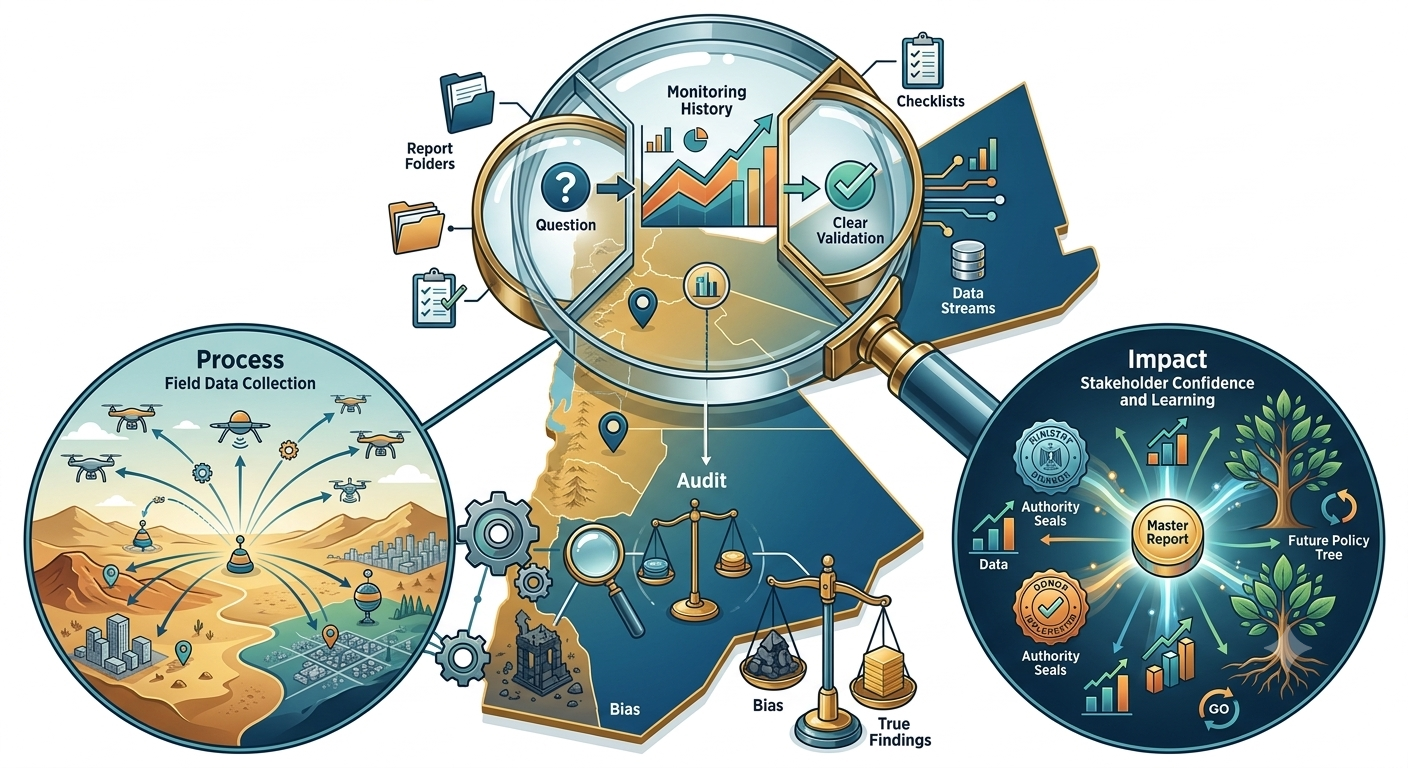
The Role of Data Solutions in Supporting Informed Decision Making
Development and humanitarian organisations operate in some of the most complex, resource-constrained, and rapidly shifting environments in the world. The decisions they make, where to direct funding, which populations to prioritise, whether a programme is working, how to respond to a deteriorating crisis, carry consequences measured through people's lives, livelihoods, and long-term community resilience.
In this context, the quality of decision making is inseparable from the quality of the data that underpins it. And that is precisely where development data collection comes in. Yet, a persistent gap remains. Reports produced on fixed cycles that do not match operational timelines; indicators selected to satisfy donors rather than answer the questions programme managers are actually asking; data collection treated as a final activity rather than a continuous source of intelligence. The result usually is an organisations generating significant volumes of information without reliably converting it into better decisions.
Closing that gap requires understanding what data solutions are actually supposed to do and designing them accordingly.
Role 1: Converting Data into Decision Support
The most important role a data solution plays is not collecting data. It is making decisions possible. Data collection asks: what information can we gather? Decision support asks: what do decision makers actually need, in what format, and by when?
Organisations that design their data systems around the second question consistently make better use of their evidence. This means beginning not with indicator frameworks or sampling methodologies, but with a structured mapping of the decisions the organisation needs to make and working backward to identify what data is required to make each of them well.
In practice, this reorientation shifts emphasis from comprehensive measurement to targeted intelligence. It aligns MEL research frequency with decision timelines rather than reporting cycles. And it produces outputs (dashboards, briefs, structured summaries) produced in the formats and timeframes decision makers can use, rather than technical reports that satisfy documentation requirements without driving action.
Role 2: Guaranteeing the Quality that Informed Decisions Demand
A data solution is only as valuable as the data it produces. Decisions made on the basis of inaccurate, incomplete, or unrepresentative data are decisions carrying false confidence, which is in many cases more dangerous than acknowledged uncertainty.
Data quality is therefore not a technical consideration separate from decision making. It is the foundation on which the entire value of a data solution rests.
This means investing in strict data collection protocols, independent verification and third party monitoring, and systematic quality assurance at every stage of the research. It also means being transparent about limitations, clearly communicating what the data can and cannot support so that decision makers judge their confidence appropriately.
Role 3: Serving Every Level of the Decision-Making Cycle
Data solutions do not serve a single audience; they have the capacity to serve an entire organization. At the strategic level, data solutions provide the evidence that informs organisational priorities, funding allocations, and programme design choices. At the programmatic level, they generate implementation evidence on reach, quality, and emerging challenges that enables adaptive management. And at the operational level, they produce the real-time monitoring data that allows field teams to identify and respond to problems before they become crises.
Each level requires different data, different collection approaches, and different reporting formats. Organisations that design a single data system to serve all three simultaneously often find it serves none of them adequately. The most effective data architectures distinguish between these functions by building systems appropriate to each decision type while ensuring findings flow coherently across all three levels.